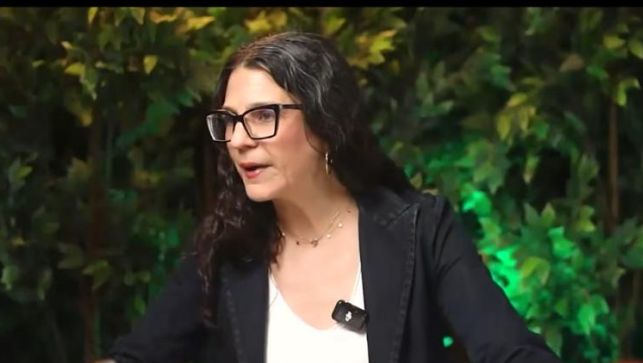
Why the TANUR SHEL AKHNAI Story is So Widely Analyzed.
OK, So what might be surprising to you is that we have gotten through now, is it nine months or eight months of learning together, and we have not yet learned the story of the Tanur Shel Akhnai from BABA-METSIYA 59AandB.
This is partially on purpose because this is maybe one of the most analyzed stories in the Talmud. It's incredibly popular.
It is used, and may be abused by schools of thought across the board to justify their theology, their philosophy, their approach to Jewish life.
It's one of the key and cornerstone texts that we learn in seminary.
In rabbinical school, it is seen as heralding the path of the of the Conservative movement.
It is also taught at the beginning of 9th grade to students as a way of introducing them to questions of Hellenic authority.
It's a very popular and incredible story, and I'm so glad that we waited.
I wanted to put this near the end because we're going to get so much more out of it now than we did at the beginning, because now we are very practiced in reading texts from a literary and moral and spiritual perspective, which is the way that we've been approaching texts throughout the course of this this year. So I'm going to warn you that we have, we have a lot to cover today. Thank you for joining.
And, and I'm excited to get that you have to, we have to stay to the end though, because I have a take on this that's different from how I would have taught it in the beginning of the year. And I want for us to try to get there together.
I will also say that when we first conceived of this class, the idea was one hour, in and out on a weekday morning and it would be 45 minutes of learning and 15 minutes of schmoozing.
And I don't think we've ever gotten to our 15 minutes.
So I owe you all many minutes of schmoozing on the Shabbos afternoon one of these days.
So, OK, I want to take the opportunity as we begin to look at this text, to do what we've been doing all year long, which is to contextualize the SUGYA or the piece of Talmud that we're learning, really looking at what comes before and after.
And often when you hear Talmud used in common parlance or in sermons or in DRUGSA at their teachings, you just dive right into the SUGYA and there's a certain amount of meaning that you can get from that.
But when we zoom out, as we have for this entire year, and we really look at the context, there's a lot for us to learn.
So I want for us to zoom out before we even begin and start by looking at the MISHNAH from BABA-METSIYA 410, which is text #1 on the top of our page.
Exploring the MISHNAH's Prohibition Against Causing Harm with Words.
Because the context for this incredible and complex story that we're going to read is the following.
It's as the MISHNAH, says KA ASHE SHE ONA BA MI K'HU MIMHAR K'HU NA B'DIVARIM.
Just as there's a prohibition against exploitation or harm in buying and selling, also there is ONA, there's harm or exploitation with words, with statements.
So it goes on to say things that we are not allowed to say ONA B'DEVARIM, harm that we can cause another person by words alone.
For example, you can't say to a seller for how much are you selling this item if you know you're only going to go home and buy it on Amazon. That is a violation of Jewish law, right?
And I wish my mom were here today because my parents were retailers and people used to come into the store and they would take the time of the salespeople and say, tell me the difference between this TV and this TV or this refrigerator and this one. And then they would go; they would go to some warehouse place and buy it for cheaper.
But that is actually a prohibition according to Jewish law. It's called Ona ATZAVARIM.
And we're going to talk about why in a moment.
A second example from the text.
This is about TSHUVA.
If a person has wronged someone and then gone through the process of TSHUVA, they have made amends.
They've gone through the process of reconciliation.
You're not allowed to say to that person, remember what you did, right?
You're not allowed to say to a person; Remember your earlier deeds.
If one is the child of converts, another may not say to him: Remember the deeds of your ancestors, as it is stated: And a convert shall you neither mistreat, nor shall you oppress him (Exodus 22:20).
If one is a convert and he came to study Torah, one may not say to him: Does the mouth that ate unslaughtered carcasses and animals that had wounds that would have caused them to die within twelve months [TEREIFOT], and repugnant creatures, and creeping animals, comes to study TORAH that was stated from the mouth of the Almighty?
Because think about our criminal justice system, by the way, and what it means to mark people for life versus this approach, which is everybody makes mistakes.
There are pathways to redemption from those mistakes.
For almost everything there is TSHUVA GAMORA.
You can actually go through a fully redemptive process and you become a different person on the other side.
And what an act of cruelty it would be to then go to someone and say you, you're just what you were before you went through that process.
You might hear echoes here and also later today in the story of Resh Lakish and Rabbi Yokhanan that we started with.
If you were with us all the way back in November, where Resh Lakish, who started out as a criminal, a life of criminal behavior, and becomes a great Torah scholar, is reminded of who he was before he went through that transformation.
So you're not allowed to do that.
If one is the child of convert, if somebody goes through a conversion process or their parents go through a conversion process, you are not allowed to say to them, yeah, but you're just a convert, right?
You're not really a Jew because your parents weren't Jewish or your grandparents weren't Jewish.
Those are the three examples that the MISHNAH gives and that the GEMARA will actually speak on.
And I don't include all of them here to give several examples expounding upon what it means to engage in ONAT D'VARIM in oppression or exploitation or harm through our words.
I just wanted to show you a couple of the examples here before we get to our SUGYA.
So we're going to do this quickly and maybe we'll have time to have questions about them later.
OK, This is the BAALTSHUVA.
We're now in the Talmud, which is expounding on what we just read in the MISHNAH.
OK, so imagine that somebody is a BAAL TSHUVA and you can't remind him of his earlier deeds.
If someone's a convert, you can't remind them.
So what can you not say to someone who converted?
How humiliating for a person to say: You grew up eating treyf; You ate ate animals that are unclean and now you're going to dare to teach TORAH?
I want to think about the level of sensitivity that the rabbi's are bringing here because they understand something about shame and about identity and that it matters profoundly the way that we see ourselves and the way that we're seen by others and that we can do real harm to somebody when we diminish them in this way.
Bava Metzia 58b:11
Rabbi Yo?anan says in the name of Rabbi Shimon ben Yohai: Greater is the transgression of verbal mistreatment than the transgression of monetary exploitation, as with regard to this, verbal mistreatment, it is stated: And you shall fear your God. But with regard to that, monetary exploitation, it is not stated: And you shall fear your God. And Rabbi Elazar said this explanation: This, verbal mistreatment, affects one s body; but that, monetary exploitation, affects one s money. Rabbi Shmuel bar Nahmani says: This, monetary exploitation, is given to restitution; but that, verbal mistreatment, is not given to restitution.
Look at the next example.
If torments are afflicting a person.
We studied together the story of Rabbi Yokhanan and all of the rabbis who have suffered grave harms.
So to their physical body.
If somebody is afflicted by illness or if somebody buries his/her children, you're not allowed to talk to them like Job's friends talk to them now.
Do you remember how Job's friends talk to him? It's this.
We should do a whole year of study on the book of Job.
I'm going to have my brother-in-law, Larry Co, lead that with me because he's a literary expert and he looks at the story of Job as a way of engaging suffering from a literary perspective.
When the friends of Job first come, when he has lost everything, the first thing they do is they sit down in silence.
They are silenced by his pain and they're just present with him for seven days, and it's good.
That's actually the right thing.
It's only when they start opening their mouths that the problem occurs.
And when they start talking, because of their own inability to hold Job's suffering and to make sense of why good people will suffer, they start to suggest that it must be because of something that Job did to anger God.
So they're saying, don't you dare go to somebody who's in pain and don't you dare go to somebody whose child has died and start theologizing with them, because that is ONAT D'VARIM.
You don't walk into that kind of harm, that kind of pain and add your own harm, right?
And I will just say that I'm just finishing Rachel Goldberg Poland's book that just came out, When We See You Again, released in April 2026, a deeply personal memoir focusing on grief, love, and mourning following the 328-day captivity and subsequent murder of her son, Hersh Goldberg-Polin, by Hamas in 2024.
I think it's just coming out or just came out.
I got an advance copy.
And she shares one story that is so devastating.
They had thousands and thousands of people come to SHIVA after Hirsch was murdered.
And she says that one couple waited online for hours to come up to them in the mourning tent and looked into the eyes of Hershey's two sisters, Orly and Libby, and said, today you've not only lost your brother, but you've also lost your parents.
And she said it was such a cruel thing.
They thought that they were helping, but it was so much more pain for them.
And what the Gemara is saying, what it's really saying here is be really careful with your words.
The friends who sat in silence were more right than the friends who then tried to make sense of another person's suffering.
Be careful with your words.
So ONA B'DVARIM is real.
We can do damage.
And in fact, if you look at text #4 Rabbi Yokhanan teaches in the name of Rabbi Shimon Bar Yokai, it's actually worse to engage in ona a
B'DVARIM than in ONA B'MAMMON.
It's worse to harm someone with words than to steal from them or to cheat them by taking something from them.
And why is that?
Because if somebody cheats you in business, he can pay you back and you can be made whole.
If somebody harms you with words in the way that we're describing it, you can never be made whole again.
And so that's the context.
That's a pretty important moral framework for us to hold and something that the rabbi's take extremely seriously.
And I want to just go straight into the story now for the sake of time, not to dig into that further because we are going to circle back and look at this again at the end.
RABBI ELIEZER'S MIRACLES FAIL TO CONVINCE THE RABBIS
And now are we ready to start the story?
We learned in a MISHNA there (Kelim 5:10): If one cut an earthenware oven into segments, and placed sand between each and every segment, Rabbi Eliezer deems it ritually pure. And the Rabbis deem it ritually impure.
Bava Metzia 59b:1
And this is the oven of AKHNAI. What is the relevance of AKHNAI, a snake, in this context? Rav Yehuda said that Shmuel said: that the Rabbis surrounded it with their statements like this snake, which often forms a coil when at rest, and deemed it impure. The Sages taught: On that day, Rabbi Eliezer answered all answers in the world, but the Rabbis did not accept his explanations.
OK, so the GEMARA begins.
So it begins by citing a MISHNA that comes from a separate tractate that says that if someone has an oven, which is an earthenware oven, and they cut it into segments and they put sand in between each layer of the cylinder of that oven, s that oven kosher for use or not?
Rabbi Eliezer says that yes, it's TAHOR.
It is kosher and can be used again. All the rest of the rabbi's say no, it is cannot.
So we are going to come back to that at the end of this lesson, and we have to take a deeper look at what's actually going on with this oven.
But for right now, what I want you to pay attention to is this.
There's a guy who has an oven that has been adjusted in order to render it pure by placing sand in between the layers of the earthenware.
And one rabbi, Rabbi Eliezer says it's OK, you can use your oven. It is pure.
And all the rest of the rabbi's say it's not.
This is a regular debate between rabbis about whether something is kosher or not kosher.
OK, or so it seems.
This is called, they say, the oven of AKHNAI.
And what is the relevance of AKHNAI?
Well, that word means "snake."
So it's possible that the guy who owned the oven is called AKHNAI, and so it's called TANUR SHEL AKHNAI, the oven of AKHNAI, because it's his oven.
But the rabbis are attentive to the meaning of words and they say that it's when we call it the oven of AKHNAI, that means it's the oven of snakes.
And why is it the oven of snakes?
Because Rabi Yehudah says the rabbis are about to surround this oven like a snake which forms a coil at rest.
And when they surround this oven like snakes, they are declaring it impure.
So already there's something ominous that I want for us to pay attention to.
There's something ominous about this oven that should be a little bit foreboding, A foreshadowing for us about what's about to happen.
Rabbi Eliezer responds to all the arguments that they bring by encircling this oven like snakes, by giving every single logical reason that he can come up with, all the answers in the world.
It says KAWL TSHUVO SHEBA OLAM, every answer in the world about why this oven is kosher, but they do not accept those answers.
OK, so it's a regular debate about if you can eat food that's been cooked in this oven or not.
Is the oven kosher or not?
That now we see it is starting to feel like it's about more than the KASHRUT of an oven.
After failing to convince the rabbis with logic and with reason, Rabbi Eliezer says to them, IM HALAKHA KAMOTI.
If the HALAKHA, if the law is like me, if I'm right, this carob tree will prove it.
How can a carob tree prove that a halakhic argument over whether or not an oven is kosher and therefore you can eat the food that was cooked in it?
How can a tree prove a halakhic argument?
So the answer is, as soon as he says it, the carob tree pops out of the ground, it is uprooted from the ground and it moves over 100 cubits or some say 400 cubits, and then it plops back down again across the fields.
So what?
What's going on here?
So it seems like Rabbi Eliezer Ben hurkanos, who's one of the most brilliant of the sages, is trying to prove a legal and logical argument through miracles, through engaging the supernatural.
And the fact that it works is something we need to pay attention to, right?
Because if I called upon a tree to move from here to here to prove, you know, a hellofan argument, probably it wouldn't move.
There's also significance to the carob tree, obviously.
So do you remember encountering the carob tree earlier in our studies together?
Honi, the circle maker, is the one who engages the carob tree, sees an elder planting a tree. It takes 70 years.
The carob tree is a motif throughout rabbinic literature because it takes a long time for a carob tree to grow.
It symbolizes the long term, a kind of deep, deeply rooted thing.
And Rabbi Eliezer is uprooting that thing and moving it over, demonstrating that he has the power maybe to move the tradition from here to here.
OK, we're going to read into all of this once we have more evidence.
So that's story #1 he moves the carob tree.
The people, the rabbis, must have been stunned.
They must have burst into tears and said, Oh my God, he must be right, because the carob tree got up and moved.
Nobody's ever seen a miracle like this before.
Except that's not what happens because instead the rabbis say to him: We don't learn Torah from a tree.
OK, so you got the tree to move, but that means nothing to us.
We're a legal body.
We need to make legal decisions.
And we think you're wrong and we're right.
We think that the oven is not kosher.
You think it's kosher.
It doesn't matter to us that you were able to make that tree move.
OK.
So Rabbi Eliezer stands up again and he says, if I'm right, this stream of water will prove it. And then before their very eyes, the stream of water reverses course and starts flowing upstream instead of downstream.
And surely, once again, you might think that the rabbis would say, Oh my God, clearly God or nature is on the side of Rabbi Eliezer.
Clearly we're wrong and he's right.
But they say the same thing.
One does not bring proof for a legal argument from the flow of water.
What's the symbolism of water?
In our tradition?
Water is life.
Water is Torah.
Trees are life, trees are rooted, trees are our roots in the ground.
What happens if water flows backwards?
Just planting the seed.
Now we won't answer this just yet.
We have to get one more example here.
OK, so look at text #8.
Rabbi Eliezer then says to them, if the law is like me, may the walls of this study hall cave in.
We'll prove it.
And what happens?
The walls of this space begin to collapse.
Who's inside the building?
The students of Torah are inside the building.
OK.
This is calamitous.
And what I want us to think about for a moment is that all three of these things are utterly calamitous.
Right?
Uprooting a tree, reversing the flow of water, and bringing down a building on top of students of Torah are all a particular kind of messaging, and we're going to address that in a moment.
But what does it mean that the walls begin to fall on the students as if God also has control over the walls of this building and their likelihood of collapsing.
And we are now in a crisis moment because all of the rabbis are going to get crushed under the walls.
And that's when Rabbi Yehoshua stands up and he scolds the walls and he points to the walls and he says, listen to me.
If rabbis are arguing over a legal matter, it's none of your business. So stop falling on us.
And that works.
And so out of deference to Rabbi Yehoushua, the walls stop falling.
But out of deference to Rabbi Eliezer, the walls don't straighten up again either.
And to this day they remain leaning.
OK.
By the way, you might hear also the echo of the MEZUZAH which is a compromise between those who thought it should be straight and those who thought it should be parallel to the ground.
And so it is, So it is diagonal.
This is now the symbol of compromise.
So who's the great compromiser so far in this story?
Who knows how to compromise here?
The walls, Not the humans, not the rabbis, not the great sages with all of their voluminous knowledge.
The walls, the inanimate object has greater understanding of what compromise looks like than the human beings do.
OK, so now.
And by the way, some of the scholars point to the fact of the walls falling in, that it's a different kind of image than the tree and the water.
Not only because it is in the natural world and in the human built world, but because it seems to be saying that this, the very structures that we build in order to create containers for our holy work, the structures that we build in order to protect ourselves, they grow weaker by our inability to find our way to each other.
And there's something beautiful about the leaning walls, but there's something ominous about it, right?
I mean, sure, if you've gone to the tower of Pisa, you know, it's a little scary to stand under a tower that's like this.
And so it feels like we are jeopardizing the very spaces that we're in when we can't find our way into compromise with each other.
So, so far, we have an image of one rabbi fighting with all the rest of the rabbis, using all of the logical arguments in the world and them encircling him like a snake.
Who's threatening whom?
You might think that Rabbi Eliezer is the one who's threatening here because he's the one who uproots the tree, who reverses the flow of water, both of which will have major ecological implications, right?
I mean, you know, you understand what will happen in an arid land when the flow of water reverses course.
People will die.
What happens when a tree is uprooted, uprooting a tree is a grave sin, right?
We don't engage in wanton destruction of the natural world.
And yet Rabbi Eliezer does.
And it seems as though he's literally willing to have the walls fall on top of the humans inside of that building.
And yet the text says in the beginning that the rabbis encircled like a snake.
So we're already hearing a hint that there's something complicated going on here, maybe something more than appears to us at first, which is a seed that I'm planting for our further discussion in a few moments.
It seems like the editors of this story.
Well, tell me what?
Let's pause for a moment.
What do you think so far is the message that the editors of the story are trying to communicate to us?
Dissent should be permitted.
And how do you read that here?
Well, even Eliezer in his minority view, he should be heard.
OK, so we are reading here that Eliezer should be heard.
Any minority views should be heard.
I would say the obvious - that's AI think, a deeper level read of what's going on here.
I think the top level read of what's going on here is that we have the voice of a person who I will tell you, Rabbi Eliezer, is conventionally understood to be a very conservative reader of the tradition.
He has some of the more hardline views in the tradition.
He's considered to be a bit of a fundamentalist; that this fundamentalist is on one side of history and all of the rabbis are on the other.
And this fundamentalist believes that he has the right way of understanding the tradition and he's literally willing to have people die for it.
He's willing to destroy the earth and the humans in order to be right.
If you just look so far at what we're engaging, literally, it seems like the story is saying here is a person who is so stubborn, who's so stuck on being right that he's literally willing for people to die for this oven to be deemed kosher.
As we keep going, I have a quick question.
What's the relationship between the buying and selling?
Hold it because we didn't get there yet.
That's the question that's often not asked because it started just with that they're having an argument over an oven.
So we're going to come to that, OK.
So he is literally willing to disrupt the natural order, to disrupt the ecology in order to prove that he's right.
That's how right he is.
He is willing to cause grave harm to the people and to the land in order to prove his point.
And the rabbis again and again and again say, no, we're not going to take your argument just by virtue of the fact that you're showing all of these miracles, even though you have to wonder if the rabbis aren't like, guys, clearly God is on the side of this person.
Why is the carob tree able to uproot?
Why is the water able to flow?
Why are the walls able to fall?
And then we have the following piece of narrative.
And then Rabbi Yahoshua declares 'It's Not in Heaven' and Assert Authority.
Rabbi Eliezer finally comes back to them, and here he's exasperated.
And he says:
If the law is like me, from out of the heavens, the proof will come.
So now it's not just a supernatural seeming event because maybe you justify the splitting of the sea by the east wind and the south wind intersect.
You know, there's no other explanation for this.
Look what's about to happen yet.
A BATKOL, the voice of God, comes down from the heavens and says, What's up with all of you? Why are you differing with Rabbi Eliezer? The HALAKHAH is always as he says.
Not just here, but every single time.
That's a blow, by the way, because as I told you, he's a hardliner.
Rabbi Eliezer has some positions, particularly about women that could make you cry.
I mean, they make me cry.
And so here the voice of God, the Divine voice, which by the way, is a feminine voice, the BATKOL comes down from the heavens and says to the people, Stop fighting with this guy.
I showed you that he's right by letting that tree move.
I showed you he's right by reversing the water.
I showed you he's right by having the walls nearly crush those students to death.
He's right.
And not only is he right here, he's always right.
The voice of God tells the rabbis to listen to Rabbi Eliezer.
This oven is kosher.
OK.
What does it mean for there to be signs all around us?
And yet we don't want to read those signs as the and don't want to see that this might actually be the will of God.
And here God is actually saying this is what telling you is the right answer.
And at that moment, again, one would expect that the rabbis, these are people of faith, OK, That the rabbis would say, OK, it's undeniable.
Clearly, we have to go with Rabbi Eliezer.
The oven is tahor.
It is pure.
And yet Rabbi Yahoshua stands on his feet and he says the following: LO BASHAMAYIN HI.
So here you have to imagine Rabbi Yahoshua pointing to the heavens and saying it's not in heaven, which is a quote from the book of Deuteronomy.
Bava Metzia 59b:5
Rabbi Yehoshua stood on his feet and said: It is written: It is not in heaven (Deuteronomy 30:12). What is the relevance of the phrase It is not in heaven in this context? Rabbi Yirmeya says: Since the TORAH was already given at Mount Sinai, we do not regard a Divine Voice, as You already wrote at Mount Sinai, in the Torah: After a majority to incline (Exodus 23:2).
Deuteronomy 30:12
It is not in the heavens, that you should say, Who among us can go up to the heavens and get it for us and impart it to us, that we may observe it?
He is saying to God: This isn't about You. This is about us. It's very clear to us what you, God, think is right here. And that is frankly irrelevant to us.
This is not a vote, but not a veto. This is it. Your voice doesn't matter. God doesn't actually matter here because even when we have objective proof that You don't support that, You support this. You don't support our position, You support Eliezer's. Even still we don't agree with You because it's not in heaven.
And the rabbis then ask what does it mean? It's to say that it's not in heaven here.
And Rabbi Yahoshua says since the Torah was already given at Mount Sinai, we do not regard a divine voice anymore.
You gave us the Torah at Sinai. It's no longer relevant.
You handed Your holy word to human beings, and now human beings get to interpret what Torah means.
And a Hooray! Majority rules! And in this case, the majority of the rabbis want to deem that oven kosher and one guy and God wanted to deem that oven pure or kosher.
Who wins? The rabbis, because God is irrelevant and Eliezer is only one.
Bava Metzia 59b:6
The Sages said: On that day, the Sages brought all the ritually pure items deemed pure by the ruling of Rabbi Eliezer and burned them in fire, and the Sages reached a consensus in his regard and ostracized him. And the Sages said: Who will go and inform him of his ostracism? Rabbi Akiva, his beloved disciple, said to them: I will go, lest an unseemly person go and inform him in a callous and offensive manner, and he would thereby destroy the entire world.
Bava Metzia 59b:7
What did Rabbi Akiva do? He wore black and wrapped himself in black, as an expression of mourning and pain, and sat before Rabbi Eliezer at a distance of four cubits. Rabbi Eliezer said to him: Akiva, what is different about today from other days, that you comport yourself in this manner? Rabbi Akiva said to him: My teacher, it appears to me that your colleagues are distancing themselves from you. Rabbi Eliezer too, rent his garments and removed his shoes, as is the custom of an ostracized person, and he dropped from his seat and sat upon the ground.
Bava Metzia 59b:8
The Gemara relates: His eyes shed tears, and as a result the entire world was afflicted: One-third of its olives were afflicted, and one-third of its wheat, and one-third of its barley. And some say that even dough kneaded in a woman s hands spoiled. The Sages taught: There was great anger on that day, as any place that Rabbi Eliezer fixed his gaze was burned.
And now I think it's important to know I'm putting a lot forward, and we're not nearly done, but I want to share to just reflect on the incredible CHUTZPAH that is involved in a rabbi pointing a finger at God and a rabbi who is acting as an EVED HASHEM in this world, as a servant of the Holy One whose work is to try to interpret God's will in the world.
And then God says, This is my will. And the rabbi says this isn't about You, right?
The CHUTZPAH.
But the way, that the rabbis do that is even more CHUTZPAHDIK, right?
Because they do it by quoting verses from the divine text, from the TORAH, and they are misquoting those verses.
So there are so many layers of rebellion here of CHUTZPAH here.
So look very quickly at Deuteronomy, which is where LO BA SHAMAYIM actually comes from.
It's not in the heavens and what's going on in the TORAH text is not at all what the rabbis are using the text to say in this case.
So in Deuteronomy chapter 30, verse 12, LOBASHAMIYIMHI is a way that Moses is trying to encourage and inspire the people who are now toward the end of their journey, toward the promised land, to obey God's word, not to disobey God's word, but to obey God's word saying you can do this. You have the power as a human community to do this.
And the rabbis read that instead as a way of disenfranchising God or separating God out from the holy work, right?
What Moses is saying is we are engaged in this holy work together with God.
That's what the covenant means, and Rabbi Yehoshua uses it to mean the opposite, which is it's no longer about God.
Now it's about us.
And if you look at the other PASUK that is quoted, we're going to the pizza place instead of the vegan Mexican.
So in verse 12, actually it means literally the opposite, because the verse says in Exodus 23:2 - You shall neither side with the mighty to do wrong. You shall not give perverse testimony in a dispute so as to pervert it in favor of the mighty.
The verse itself is warning against perverting justice because everybody's bandwagoning in a way that is unjust and the rabbi's cut the phrase short to say you should follow the majority.
The verse is literally warning US against following the majority to do wrong.
And the Rabbis are manipulating the text to make it a proof text for what they want Torah to mean, which is not in any objective way what the verse from Deuteronomy or Exodus means.
Do you understand what's happening here?
The Rabbis are saying we own this tradition now. We own this tradition and we'll show You how much we own it by literally manipulating God, using Your own words to read them in a way that suits us, even though we all know that that's not what those words mean.
That manipulation of the text is considered holy, and this text becomes celebrated as a kind of radical defense of human autonomy and engagement with Judaism and a deep defense against fundamentalism. Our tradition is not a fundamentalist tradition.
We are an interpretive tradition, and this text is used again and again and again over generations and especially in the last century, as a defense for a kind of Judaism that honors the human community's ability to read and interpret tradition in a way that actually makes sense for the living people who are engaging in it.
Even to the point of pointing to God and saying, butt out of this, this isn't about You, right?
You think women shouldn't be rabbis? You're going to try and prove that to me with a miracle.
This isn't about you. This is about us.
We're building a Jewish community that's rooted in our own core values, and this text becomes the embodiment of that message.
The way that we make decisions in legal context is not about supernatural signs. It's not about miracles and plagues and wonders.
It's about rational deliberation. It's about tradition, it's about debate, and it's about majority rule.
And what our rabbis found to be incredibly empowering. Because they're the sages, right? We're the sages.
We get to decide what the law actually is, even in the face of explicit evidence to the contrary. We get to decide because we're not a tradition that does that just because God says so. We're a tradition that that contemplates what our morals are and then builds a collective that responds to the moral imperative, whether or not that's actually the divine will.
I'm going to pause for a moment here.
Celebrating Democracy and a Living Tradition Over Fundamentalism. Does that version of Judaism resonate for us?
Can you understand why the rabbis were so very excited about this text?
Yes, Yes, Yeah. It's a living thing.
This isn't a text that was written once with God's will attached to it. This is a response to originalism, Right?
This is saying it doesn't matter what the founders thought. That line in the Constitution meant the founders were slaveholders.
It's what we think that it means. It's alive.
It's about our interpretation of this text to the point of saying to Thomas Jefferson, Thomas Jefferson comes down as God here and says, no, that's not what I meant.
And the Supreme Court justices say we don't care what you meant. Literally, we don't care.
We're building a living community, a collective, a democracy, and we, it's our responsibility to interpret this in a way that makes sense to us.
It's a living tradition and therefore it is an interpretive tradition and we're not going to be ashamed of that.
That's an imperative for a living tradition. It is the embodiment of freedom, right?
And it is incredibly empowering. It's saying to us that we're a part of this conversation. We're part of building that majority now.
And so let's look at the tradition and see what resonates for us and what is the meaning that we can draw from this thing.
I understand why this is the first text that they teach when we get to seminary, right? It makes sense to us.
This is saying you're becoming a part of the "it's not everybody, but the people who know something who are invested in it."
He's rebel Eliezer arguing with sages, with people who've dedicated their lives to trying to discern the meaning of these sacred texts for our time.
And once you enter that conversation, you are empowered to transform that conversation, right?
You can build a way. It's evolutionary and revolutionary, right?
It's a revolutionary idea to say we have a tradition that is thousands of years old that is shaped by the majority of adherence to that tradition.
It's not shaped by fundamentalist perspective.
It's not even shaped by the actual awareness of what the original intent was, by God's intent.
It's not just Eliezer who gets marginalized here, it's God who gets marginalized here.
And that is a healthy way of engaging in a religious tradition so that so the rendering of this goes, So what?
What do we learn?
OK, so well, actually we have to go just a little bit further for us before we really learn this.
Because you might think, you might think that the humans have a victory, but God is livid, right?
That God, imagine Rabbi Yehoshua, points up to the heavens and says, this isn't about You.
And you might think that now the humans are clinking their glasses and celebrating, but God is weeping.
But that's not actually what happened. And we know all of this because this story goes on.
You have to go back for a second because I cited for us Deuteronomy, the text from Deuteronomy and Exodus.
But go back to text #10 for a moment.
So after Rabbi Yehoshua says LO BASHAMAYIMHI, it's not in heaven and two verses from the Torah, that one and one from Exodus are distorted in order to bring the meaning that the Rabb's wanted to mean.
Look what happens.
Years pass and Ravi Natan encounters Elijah the prophet, which happens sometimes and says to Elijah the prophet, I'm so curious, what did God do that day when Ravi Yehoshua stood up and declared that it wasn't in heaven and now it's in our hands. What did God do?
Which means by the way that the rabbis, for centuries, were wondering like they had their victory, but there was always a little question of doubt.
What if we're wrong? What if God actually was very upset about that?
So luckily this encounter with Elijah happened so that they could actually find out what God did and listen to what God did.
Elijah shares that God smiled and said, NITSHUNI BANAI, NITSHUNI BANAI, My children have defeated Me. My children have defeated Me.
My children have triumphed over Me, which means not only did God get put in God's place, which is in the heaven, You rule over the heavens, we rule over the earth.
But God is pleased with this because God loves us enough to say, I trust you to make your own decisions, right?
I'm thinking about a beautiful wedding I was at in December in which the mother of the bride stood up and gave a toast and said, I have to say, I don't necessarily understand all of these rituals and the attachment to Jewish law and Jewish tradition, but I can see how much joy it brings you and your beloved.
And that fills my heart with joy, right?
There's something about a parent loving your child enough to admire the choices you've made.
I don't even fully get it, but God bless you, right?
May you continue to find joy.
And God, in this story, is that loving parent who says, I get it. It means I have to back off a little bit and let you be you in this world.
And there's something incredibly tender and incredibly profound about that encounter.
And here, friends, is where the story almost always ends.
But not for us.
BAVA METZIA 59b:9
And even Rabban Gamliel,was coming on a boat at the time, and a large wave swelled over him and threatened to drown him.
Rabban Gamliel was married to Rabbi Eliezer's sister, and he said nothing when the sages excommunicated his brother in law.
Rabban Gamliel said: It seems to me that this is only for the sake of Rabbi Eliezer ben Hyrcanus, as God punishes those who mistreat others. Rabban Gamliel stood on his feet and said: Master of the Universe, it is revealed and known before You that neither was it for my honor that I acted when ostracizing him, nor was it for the honor of the house of my father that I acted; rather, it was for Your honor, so that disputes will not proliferate in Israel. In response, the sea calmed from its raging.
BAVA METZIA 59b:10
Imma Shalom, the wife of Rabbi Eliezer, was the sister of Rabban Gamliel. From that incident forward, she would not allow Rabbi Eliezer to lower his head and recite the TACHANUN prayer, which includes supplication and entreaties. She feared that were her husband to bemoan his fate and pray at that moment, her brother would be punished. A certain day was around the day of the New Moon, and she inadvertently substituted a full thirty-day month for a deficient twenty-nine-day month, i.e., she thought that it was the New Moon, when one does not lower his head in supplication, but it was not. Some say that a pauper came and stood at the door, and she took bread out to him. The result was that she left her husband momentarily unsupervised.
BAVA METZIA 59b:11
When she returned, she found him and saw that he had lowered his head in prayer. She said to him: Arise, you already killed my brother. Meanwhile, the sound of a SHOFAR emerged from the house of Rabban Gamliel to announce that the NASI had died. Rabbi Eliezer said to her: From where did you know that your brother would die? She said to him: This is the tradition that I received from the house of the father of my father: All the gates of Heaven are apt to be locked, except for the gates of prayer for victims of verbal mistreatment.
OK, so NITSUNI BANAI, NITSUNI BANAI. It is the victory of democracy over fundamentalism, right over autocracy.
Democracy, because Eliezer's fundamentalism says there is an objective truth.
This oven is KOSHER, and the rabbis say not everybody has access to the truth.
We as a human community need to figure out how to make decisions not rooted in miracles, but rooted in reason and rooted in majority.
And we have to make sense of the world on our own. We can't count on God coming down and pointing the right way for us.
It happened here, but it's not going to happen again.
So let's set the pattern right. It is a victory for democracy. It is a victory for the interpretive tradition, as we said earlier.
Now you should just know that Rabbi Eliezer Ben Hurkanos and Rabbi Yehoshua, the one who points to the heavens, these are both students of Rabbi Yokanan Ben Zakai, who was the the great rabbi, whom you may recall from one of our earliest classes, was the rabbi at the time of the destruction of Jerusalem.
And he and several of his students left. They were able to get out of Jerusalem. And these are two of the students who were able to get out, and they follow two different paths.
And Eliezer is a traditionalist, and it is understood that his interpretation is kind of static. He is a person who listens for God's voice.
Whereas Rabbi Yehoshua is about creativity. He's about a kind of organic development of the law in the tradition. He's about reason, OK.
And so these are two different paths. And the tradition seems to be saying this is a victory not only for the people, as God says, NITSUNI BANAI.
This is a victory for Rabi Yehoshua's way, for the way of creative interpretation, of human centered interpretation.
It is a victory for uncertainty over certainty, Rabbi Eliezer. Certainty that this is right and I'm literally willing to kill people for it is not the way that the world is going to work and not the way that the Jewish community is going to work.
But instead, we have to step away from a kind of rigid attachment to the truth and engage in the breath and beauty of the human community that makes decisions that are sometimes wrong but are also right because it's what we decide together.
Questioning the Morality of a Majority That Can Be Objectively Wrong.
OK, so I'm going to take a breath for a moment because we have to pause because as I said, this is usually where the story will end, though it won't end for us. Where does this land?
Yes, I think all of that is really beautiful and makes a lot of sense, but it also puts it in a very dangerous position.
True.
What is it grounded in at all? Like what?
What is all, OK, so there there's something, there's something incredibly empowering about this and also something very dangerous about this because we have a case before us in which we literally know what the right answer is, that oven is KOSHER. And the decision that the people make is wrong. It's objectively wrong. They're treating it as unkosher.
So what happens when the majority of the voters pick the wrong president, right?
Imagine, like, what happens when the majority is objectively wrong.
So what role is there for right and wrong in a society when everything is just up to the majority?
And we could envision a society in which the people get it wrong for all kinds of reasons, but then there were repercussions.
And there's the law of cause and effect. And you can see through your actions what would happen. We trust the system.
And if we make the wrong decision, that president will be voted out after four years if he allows for another presidential election, right?
We trust that the system will self correct as long as there is a vital and vibrant human community.
And if the court makes the wrong decision now, as long as we record the dissenting opinion, a later court might one day overturn that decision.
Right.
And yet there's a danger. And I thank you for bringing it. There is a danger here.
So it's a little, it's both empowering and a little bit unsettling.
Marshall, did you have an idea?
Speaker 3 No, I was just thinking about the Grand Inquisitor and how Jesus comes to the Grand Inquisitor and as being charged as a heretic.
The Grand Inquisitor says we don't need you, you're just going to get in the way and orders the execution.
Speaker 1 OK, so Marshall is bringing the the story of the Grand Inquisitor and Jesus actually appearing before the Grand Inquisitor saying you got this wrong.
And that majority, the consensus in that culture in that moment, right, was this is what God wants.
And even when "God" appears and says that's not at all right, the people say we don't care what you say, right? We have no use for you.
So thank you for bringing that.
Speaker 3 I guess I just wanted to say that the danger, of course, is losing a connection to morality.
And I think this is exactly what you're hinting at, that when the majority is ruling against the fundamentalist who's willing to destroy the ecosystem and kill the people in the BEYT MIDRASH, we're really proud of the of the majority.
When the majority is saying, you know, we're going to perform an inquisition in which everybody who doesn't convert will be murdered and even in the name of Jesus. And Jesus comes and says no, and they say, we don't care about what you have to say, right?
There's, so that's where the distortion of the majority becomes really dangerous.
So this is both revolutionary and empowering and liberation. And it's also a little bit scary as we're seeing in our own time.
OK, so I want to keep going though.
The Community's Punishment and the Divine Retribution That Follows.
So you have to hold your thoughts about this now because the story actually keeps going here.
And if you'll turn to, I think it's text #13, and we are on page four.
OK, so the story keeps going and [OTO HAYOM] on that very same day the rabbis just won and God laughed and said it's KUNI BANAI, you are right, you have defeated me and God is thrilled about that.
The rabbi's then go out and they take every item that Rabbi Eliezer has ever deemed TAHOR has ever deemed pure, like he tried to deem this oven pure, and they throw it into a fire and they burn it to the ground.
Then the rabbis reach a consensus majority rule and they decide that Rabbi Eliezer needs to be ostracized or excommunicated.
And the reason that I say or is that the language that they're using here is purposely ambiguous and, and it's actually a kind of a tender thing that's happening here.
But the word is BARACHHU, which is from BARACK, which is from BARUCH, which is they blessed him, which is a euphemism for they cursed him and they cursed him by sending him away from the community, either for a limited period of time or permanently.
They are sending him away, Rabbi Eliezer, away from the community and ostracization, and both being in CHEREM, the ostracization and excommunication are the worst punishments that a person could experience in the ancient world because it is worse than death in some ways, because they are still alive, but they are not.
They are completely socially isolated. They're not allowed to live in the world as they do.
They are teachers who have no students. They have all this Torah in them, and nobody will come to them in order to learn their Torah.
And so they burn all of the things he's ever said are kosher.
And then they ostracize him. And in this kind of beautifully tender moment, they ask the question of who needs to go tell him that he's been ostracized.
And Rabi Akiva who was one of his most beloved students, says, let it be me. Because if somebody does this in a way that's not gentle, he's going to burn the entire world down. Meaning, this guy, Eliezer, is clearly in cahoots with God, right?
He's able to move carob trees from here to here. He's able to make water move. He's able to make the walls incline.
This guy is supernatural and he's going to be upset by this.
And so let me go and I'll try to do it gently. And Rabbi Akiva goes and he does it in this incredibly sensitive way.
And sometimes you just want to weep by the tenderness of the, of the language and the narrative storytelling of the rabbis.
But he goes and he dresses in black and he wraps himself up and he goes and he sits before Rabbi Eliezer, but at a distance of 6 feet, like social distancing in our time, which is De la ramot.
And Rabbi Eliezer says to him, Akiva, what are you doing? What's going on?
And he says, in this kind of delicate, roundabout way, it appears to me that your colleagues are distancing themselves from you.
And Rabbi Eliezer gets the message.
He says it in the softest way. And he immediately tears his garments in mourning. And he takes off his shoes and he sits down on the ground.
The rabbi, who has a close enough connection to God that he could actually elicit supernatural events, is on the ground barefoot and weeping in torn garments.
And he's crying. He's crying because he understands that he's been alienated now from everything that matters to him, and in that moment the world is afflicted.
So Akiva thought he could mitigate against some of the damage. And yet the damage is done. 1/3 of the olive crop in the world just disintegrates. 1/3 of the wheat, 1/3 of the barley molds and and dies. And some people say that even the dough in the women's hands while they're baking bread is spoiled.
The rabbi say there was great anger on that day. Any place that Rabbi Eliezer would look, he would burn with his lazar eyes.
OK.
And so what we saw, I want you to understand literally that Rabbi Eliezer was willing to harm the natural world in order to prove his point, right.
And now the natural world is responding once again, but through incredible destruction here.
And what feels really critical for us is that God was laughing and celebrating when the rabbis outsmarted God and Rabbi Eliezer, when the interpretive tradition is the essence of the Jewish legal tradition. And it's not decided by God, but it's decided by us.
And God is a proud parent saying, I don't really get it, but I'm proud of you for figuring that out.
And then there's a turning point where God is no longer laughing and God is no longer celebrating because actually Rabbi Eliezer doesn't have supernatural powers. Rabbi Eliezer has a close connection to God, and God seems to be acting on Rabbi Eliezer's behalf here.
And God is so angry about what the people do to Rabbi Eliezer, that God brings this destruction upon the world, right?
I celebrate your creative interpretation. I do not celebrate your treatment of Rabbi Eliezer.
Right.
It's one thing to win a hell of an argument.
You can deem that oven not KOSHER. Fine, you take the win. I will laugh and smile and say I don't agree with you, but I'm proud of you.
But the moment you burn his things to the ground, I will burn your world to the ground, says God and a rageful Eliezer.
Right.
And this goes to this point that you're making about the danger, the danger of the power when the power is vested in the human community because there's a danger in the power being entirely in God's hands.
What if God deems that certain people are worthy and other people are unworthy or that, you know, that the human community should work in a way that is at odds with the way that we human beings want the world to work.
But there's also a danger in a human community holding power.
And what the rabbi seemed to be warning us about here is be careful when you get high on your own power and you start to make determinations like that.
Any person who is arrested for terrorist activities in the West Bank, that Palestinian will be hanged and executed publicly without any chance for appeal, and you're clinking glasses thinking we've defeated, we've triumphed.
But what's actually happened is a perversion of the tradition because you've become drunk. You've become drunk. On your power.
And God is saying, don't think that I'm not paying attention. And a third of the world is destroyed in that moment.
And, and the story will go on.
And I'm going to go very quickly here because we have to get to the end of the story now that our time is up.
But Raban Gamliel, whom we haven't seen yet in this story, Raban Gamliel's now on a boat.
And this is a motif. He's often Raban Gamliel's on a boat. You've heard this story before.
And a huge wave comes over the boat and is about to drown him.
And Rabbi Rabban Gamliel immediately knows; he's the NASI, He's the head of the Jewish community at this point.
And he immediately says this must be because of what was done to Rabbi Eliezer ben Herkanus.
This must be because of the cruelty that we showed him after the TANUR SHEL AKHNAI story.
The seminary students and the 9th graders shall have it, and all the people who use this story to justify how powerful it is to be part of a human community.
And it's democratic in the creative tradition.
After they stopped paying attention, we harmed that man. And God is so mad about it that a third of the world is destroyed, and I'm about to die as a result.
And Rabin Gamliel recognizes that he wasn't even in that story, but he's a part of it; he's the head of the court. He's the head of the community.
So he's fundamentally responsible for it. And he recognizes that he's responsible.
And he calls out to God and says, listen, I didn't do it for the wrong reasons. I did it for the right reasons.
And God seems to be temporarily quelled by that argument.
And the sea quiets, but only for a moment. Rabban Gamliel seems to have saved himself, but only for a moment.
And now we go into Rabbi Eliezer's home. And Rabbi Eliezer is married to Ima Shalom.
We looked at Bruria a few weeks ago. This is one of the other women who's named in the Talmud, one of the very few women who has a name.
Ima Shalom is married to Rabbi Eliezer, and she happens to be the sister of Rabban Gamliel. So now we see that this is a family dispute, OK?
The head of the Jewish community that excommunicated the great Rabbi Eliezer happens to be also his brother-in-law.
And Ima Shalom is terrified because she understands that Rabbi Eliezer has been so deeply hurt and that God is on the side of Rabbi Eliezer.
And so she says to her husband, you can't pray because if you pray, you're going to pray that my brother dies because he's responsible for this.
And so she is trying to prevent him from praying.
And maybe it worked when he was out on the boat. Rabban Gamliel was out on the boat, which is why he doesn't get swept up by the wave. He doesn't die at sea.
But then a certain poor person comes to the house begging for food.
And Ima Shalom is a TSADEKET. She's a righteous person.
Why is he hungry, the poor person?
Because of Rabbi Eliezer's honor, one third of the world has been burned. And there's no grain and there's no wheat and there's no barley and there no olives.
And the guy's hungry.
And he comes to this house to ask Ima Shalom and Rabbi Eliezer for food, maybe knowing, maybe not knowing whose house it is.
And she goes to answer the door, to give something to the poor person, and in that moment stops paying attention to her husband who prays.
And Rabbi Gamliel dies in that moment.
This is tragedy upon tragedy upon tragedy, right?
And I think what I want us to take away from this are a few things which include the fact that the triumph of, the creativity of the human community over the divine will and over fundamentalism is an incredibly powerful call. But it is a call that comes with a warning.
Be careful what you do to the people that you, the majority, defeat in argument, because the way that you treat the dissenting opinion, the way that you treat those who are courageous enough to dissent and to say out loud that they disagree with you will ultimately determine the strength of the society that you're able to build. And if you don't treat that minority, even the fundamentalists, even the hardliners, right, even the people who you really feel threatened by and disagree with, if you don't learn how to treat them like human beings who hold different views from you, we will all suffer. We will all suffer.
And there's one more layer to this.
Reinterpreting Rabbi Eliezer as a Creative Advocate for Redemption.
If you will honor. I need two more minutes of your time.
There's one more layer which I never saw before in my life.
But thank God for this class, the theory of which is to take some of our greatest and favorite stories from the Talmud and spend at least 10 hours of learning for every one hour of teaching because you will see things that you've never seen before.
This time when I encountered the story. I was struck by that oven.
So now I want to go back for a moment to that oven that they're arguing about.
Because what's happening if you look at in the verse in verse 19 in Leviticus Chapter 11, is that we learn that if certain kinds of creatures, geckos, crocodiles, lizards, chameleons, if they are impure and if they die inside of your earthenware vessel, your earthenware vessel becomes impure.
And if you look at the last line of that section that I have here, it's TAMEI HEM, they're impure and they will remain impure.
Says the TANUR SHEL AKHNAI, this guy has an oven and a chameleon dies inside of it. And the rabbis say you got to throw away your oven.
And Rabbi Eliezer comes and says, wait a minute, maybe you don't need to throw it away. There is a remedy.
Rambam talks about this later.
There's a remedy in which you can slice that oven up and in between each slice of the earthenware oven, you can put a layer of sand so that you are reconstituting that oven so that you can save it and keep your oven in operation.
I know we're in a discardable, you know, culture, right? Like the moment your thing stops working, you throw it away.
We don't get shoes fixed. We throw them away and buy new shoes and they can be there in 24 hours, right?
But Rabbi Eliezer is saying, actually, what if we don't throw the oven away?
What if we think about the oven in a different way and we reconstitute that oven and we save you from needing to throw the oven away?
Who then, in the dispute between Rabbi Eliezer and the sages, is the creative interpreter of the tradition? And who's the fundamentalist right?
All of a sudden, Rabbi Eliezer becomes the creative actor.
He's the one trying to preserve the oven. He's the one saying don't give up on the oven.
And I think that he's not actually talking about an oven.
I think that just like Resh Lakish in his argument with Rabbi Yokhanan about the sword and when is a sword finished?
Is saying, really, when is a person finished?
Can a person change? Have I fully changed? Or will I always be judged for who I was before I entered the water?
That Rabbi Eliezer is saying here, we don't throw away ovens and we don't throw away people.
We figure out creatively how to reconstitute a person who's done wrong and allow him/her to become something different.
And I just wonder, and listen, we all have to learn from it.
Candace Levy has incredible interpretations of this text and we should bring her in one day to sit with us and just ruminate on this with us.
But my question is this, is Rabbi Eliezer the fundamentalist, the hardliner, the one we would have pushed out the door?
We wouldn't have killed. We wouldn't have wanted to kill him, right? We wouldn't have burned all his stuff, but we would have said your views are horrible.
They're painful. They harm us.
Are we actually shutting ourselves off to the possibility of Rabbi Eliezer's own redemption that he's saying we don't throw ovens away.
We don't throw people away. We allow people to grow and change and become something that they weren't before.
And our tradition, which is so enamored of itself because we can say to God, LO BASHAMAYIM, We are here, and we can creatively reinterpret the TORAH itself to God.
An incredible CHUTZPAH.
We have forgotten that at its essence, the Torah is given to us not to be right, not even to create new circumstances and new measures of adjudication in which we can make ourselves right even when we're wrong.
The TORAH is given to us to honor human beings who are created in God's own image and to not give up on them and to not give up on this earth.
And when we fail to remember that, we are truly failing ourselves.
And the reason I think that this interpretation that there's something here, I mean, you would think if this story was being told just to tell the other message, that Eliezer would be the one saying throw that oven away, right?
It's like a made-up debate, right?
He would be the one saying it's not KOSHER, it's TAMEI.
And the rabbis would say, no, creatively we can rethink it, we can keep it KOSHER, but it's the opposite.
So there's a hint here that something's going on.
And right after this SUGYA, the moment this story ends, THE REAL END OF THE STORY, when Raban Gamliel dies and we see all the pain that's caused by disregarding the humanity of the human beings that are at the center of the story.
The Call to Treat Dissenters with Love and Remember Human Dignity
Look what happens in text #20 in BABAMETSIYA 59-B, the rabbis start to engage in a discourse about the treatment of the stranger.
How do we treat the stranger?
And they go on to discuss the way that we treat other people and what happens when we mistreat other people.
And here comes Rabbi Eliezer HAGADOL, the same Rabbi Eliezer Ben Hiranus who's now called Rabbi Eliezer the Great, immediately following that whole narrative that we have. And it is he who is advocating for the stranger, saying in fact, people can change for the good and for the bad, and let us remember to treat each other with love.
THE TORAH TELLS US 36 TIMES, MAYBE 46 TIMES, THAT WE MUST TREAT THE STRANGER WITH LOVE.
What happens when we mistreat another and we forget to see his humanity so much so that we hear this story and we can't even see that he's in fact the creative interpreter because he is the fundamentalist, because that's what he always has been.
What do we need to do to reawaken our moral imagination about the other?
So this text which could be about fundamentalism versus democracy and creativity, this text which could be about what it means for us to actually do harm to each other even when we're right. Rabbi Eliezer is willing to do harm to the people to prove that he's right.
The whole community of rabbis are willing to do harm to Rabbi Eliezer to prove that they're right.
That harm is something that God takes very seriously is also a fundamentally a reminder to us, to recenter the human beings who are at the heart of this story.
The pauper, the poor person who's at the door saying, hey, because of what you guys were fighting about in the beit midrash and power and dominance, I'm hungry.
What does it mean to build a society that actually recenters the human beings who are at the very heart of this story?
Final Reflections on Learning and Community Prayer.
It's so late. I need to close with an apology.
I want to hear everything that you have to say about this.
I'm going to say KADDISH DE RABONAN.
And then if you want to stick around for a few moments to engage, I really do want to hear what you think of all of this.
Is anybody grieving the death of a loved one observing a YURTSAYT? Who wants to join me in KADDISH?
So who will hold in our hearts today?
YITGADAL VE'YITKADASH SHEMEY RABA.
Thank you, everybody, and thank you for the great joy and honor of learning with you week after week. It's been absolutely wonderful.
This is Rabbi Sharon Brous, at IKAR, where we're dedicated to reinvigorating Jewish community, ritual, and learning, all while laying the foundation for a just and loving society.
You're listening to IKAR's podcast where you can hear our sermons about SHABBAT and holidays, our teachings, our guest speakers, basically anything we think worth hearing that we can capture and stream.
You can listen right here.
The whole MEGILLAH. I mean, literally the whole MEGILLAH.
So thank you so much for being with us.
https://www.youtube.com/watch?v=s4iU42bqoho